A glass color spectrum and violet swatch on a white stone display.

ONELESS / COLOR

Color Picker

A useful color starts with a place to explore. Move through a custom color field, narrow the hue, and compare your current shade with the original. Color Picker keeps the visual choice beside the values you can paste into a stylesheet or design brief.

Open Color Picker. JavaScript powers the workspace; the full guide is available below.

UNDERSTAND THE RESULT

Color, with a little context.

Hue, saturation and brightness

Hue chooses the color family. Moving right in the field adds saturation; moving upward increases brightness. Brightness here belongs to the HSV control, while the HSL output describes lightness. They are different measurements.

Opacity travels with the code

100% is opaque and 0% is transparent. Below 100%, HEX includes a final alpha byte and RGB/HSL include an alpha channel. The checkerboard is a viewing aid, not part of the copied color.

A steady point of reference

Original remains the starting violet while Current follows your changes. Reset restores that shade and full opacity. This makes small adjustments easier to judge without relying on memory.

HOW TO USE IT

From a starting point to a usable result.

  1. Drag or tap the field, or focus it and use arrow keys. Shift makes larger steps; Home and End change brightness to its endpoints.
  2. Adjust Hue to change the color family. Enter a 3- or 6-digit HEX value when you already know the opaque base color.
  3. Set Opacity separately and compare Original with Current. Copy color exports HEX; the RGB and HSL rows copy their own formats.

A WORKED EXAMPLE

From a base color to a translucent accent

Enter #336699, then set Opacity to 50%. The HEX output becomes #33669980. The final 80 is the nearest 8-bit representation of half opacity; it is not another blue channel.

EVERYDAY USES

Make the next small decision easier.

Refine a UI accent

Start from a known HEX and adjust its saturation or brightness while keeping the original beside it. Check the final text/background pair with Color Contrast Checker before using it for readable UI.

Prepare CSS values

Copy the format that fits your stylesheet. A translucent accent looks different on different backgrounds, so test it in its destination.

LOCAL WORKSPACE

Your work stays in this browser.

The tool processes color values locally. It does not upload the input to a processing server or save it in browser storage. Leaving or reloading the page clears the working state. Copying places the selected result on your clipboard; sharing sends only the page address without your working values.

These tools describe sRGB colors. Browser decoding, color management and the display can affect what you see; they are not an ICC proofing workflow or a print-color guarantee. Read the site privacy policy for information about the surrounding website.

KEEP IT NEARBY

One less search next time.

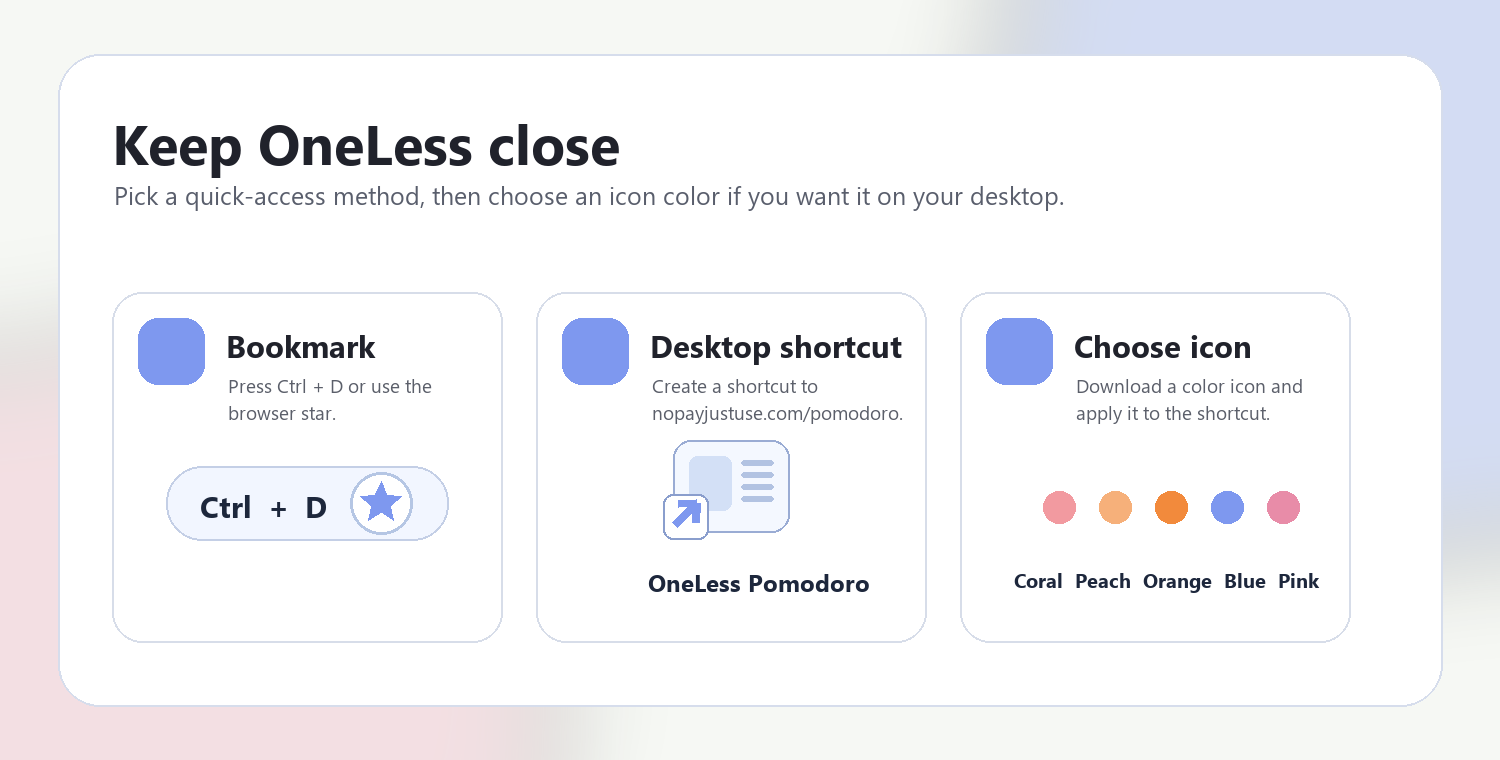
Press Ctrl + D on Windows or Command + D on Mac to bookmark this page. Your browser may also offer Create shortcut or Add to Home Screen. Shortcuts open the tool; they do not include your colors or images.

Adding a OneLess browser shortcut

Choose a shortcut icon

QUESTIONS, ANSWERED

A few useful details.

Can I enter RGB or HSL here?

This picker uses an opaque HEX base and a separate opacity control. Use Color Converter for RGB, HSL or named-color input, then bring back its HEX value.

Why is my copied HEX longer?

Eight-digit HEX includes alpha after the red, green and blue bytes. Some older applications accept only six digits; use an opaque color or a supported RGBA value there.

Does the color field use HSL?

The field uses saturation and brightness in HSV. HSL is a separate output representation of the same sRGB color.

Are my choices saved?

No. Values stay in this page’s memory. Reloading or leaving the tool starts a fresh workspace.

How do I start from an existing brand HEX color?

Enter a 3- or 6-digit opaque HEX value, then adjust hue and the color field. Set opacity separately if you need transparency. Copy the output format your destination accepts.

Is the checkerboard part of my color?

No. It makes transparency visible. The copied value contains color and, when applicable, alpha; it does not contain the checkerboard pattern.

Can I make small adjustments with the keyboard?

Focus the color field and use arrow keys. Shift makes a larger adjustment; Home and End reach the field’s boundary positions. The numeric outputs let you review the resulting color.

REFERENCES

CSS color values — MDN

ANOTHER SMALL STEP

Keep the next tool close.

Explore Color Tools ↗

Ready for a little more color?

Find a shade, refine it, and take the code with you.

Return to Color Picker ↑