Four percentages become three channels
After dividing percentages by 100, the model uses R = 255 × (1 − C) × (1 − K), with M and Y producing G and B. Output channels are rounded to whole bytes.

ONELESS / COLOR
CMYK to RGB provides a quick mathematical screen-color estimate from cyan, magenta, yellow and black percentages. Keep the four inputs beside a large preview, read the resulting RGB channels and copy a HEX or RGB value. This is useful for rough reference and learning, with the limits of a profile-free conversion kept visible.
Open CMYK to RGB. JavaScript powers the workspace; the full guide is available below.
UNDERSTAND THE RESULT
After dividing percentages by 100, the model uses R = 255 × (1 − C) × (1 − K), with M and Y producing G and B. Output channels are rounded to whole bytes.
At K = 100%, all three RGB channels are zero regardless of the other percentages. With every CMYK input at zero, the mathematical result is white.
Actual CMYK appearance depends on ink, paper, printer and the selected ICC profile. This tool uses no profile, gamut mapping or rendering intent and cannot promise a match to a physical print.
HOW TO USE IT
A WORKED EXAMPLE
Enter C 0%, M 100%, Y 100%, K 0%. The formula returns rgb(255, 0, 0), or #FF0000. This mathematical endpoint does not assert that a real printer produces the same vivid screen red.
EVERYDAY USES
Increase black to see how the simple model reduces every RGB channel, or vary one ink percentage to understand its contribution.
Copy a clearly labeled screen approximation for an early draft. Replace it with a profile-aware conversion when preparing production artwork.
LOCAL WORKSPACE
The tool processes color values locally. It does not upload the input to a processing server or save it in browser storage. Leaving or reloading the page clears the working state. Copying places the selected result on your clipboard; sharing sends only the page address without your working values.
These tools describe sRGB colors. Browser decoding, color management and the display can affect what you see; they are not an ICC proofing workflow or a print-color guarantee. Read the site privacy policy for information about the surrounding website.
KEEP IT NEARBY
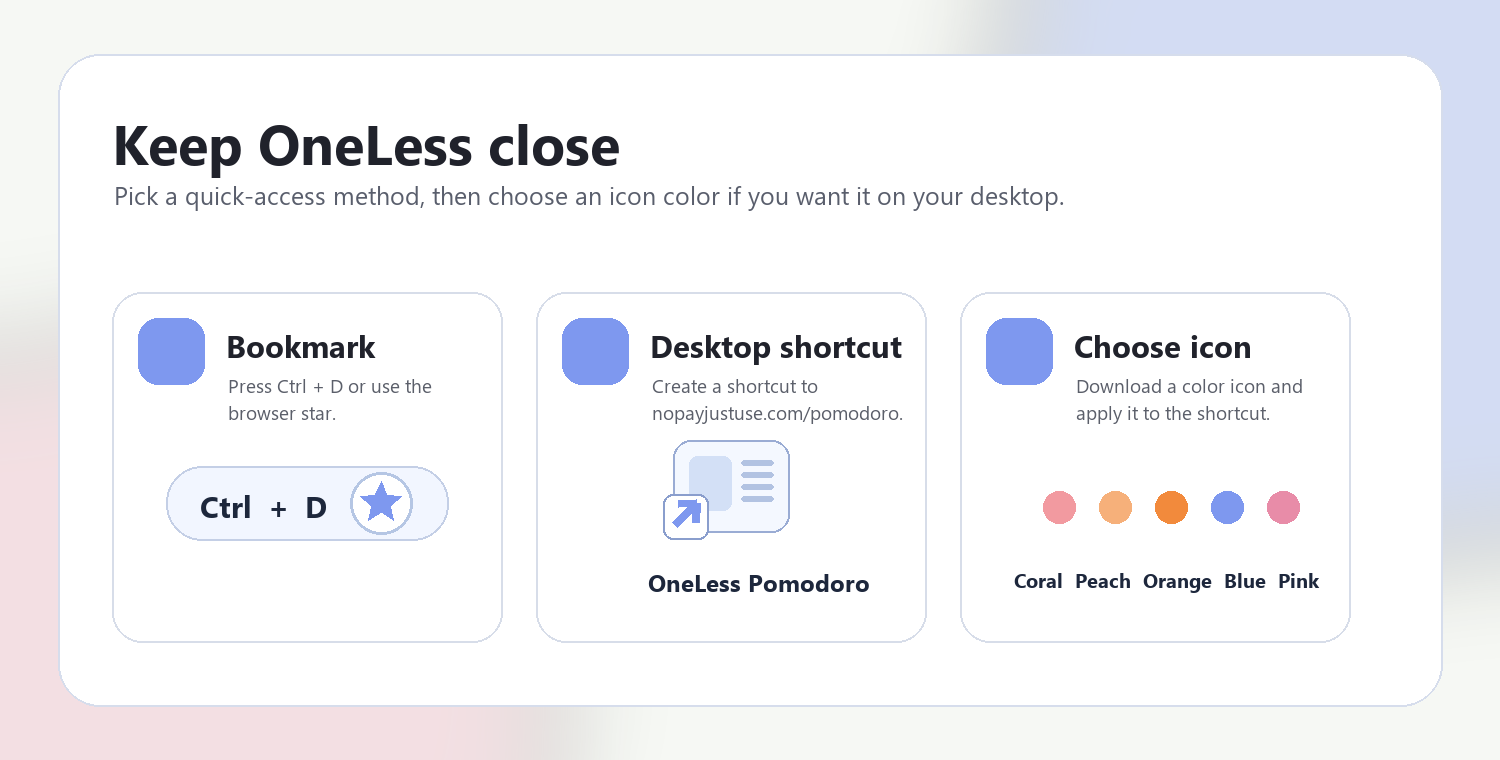
Press Ctrl + D on Windows or Command + D on Mac to bookmark this page. Your browser may also offer Create shortcut or Add to Home Screen. Shortcuts open the tool; they do not include your colors or images.
QUESTIONS, ANSWERED
There is no such guarantee. A print workflow needs the relevant output profile, material and device conditions.
No. It processes four percentages locally and does not accept profiles.
The simple equations do not have a unique inverse. Black and the other channels can trade contributions, and byte rounding can also collapse nearby results.
The copied output is an 8-bit screen representation. Calculations retain fractions until the displayed and exported bytes are rounded.
Enter cyan, magenta, yellow and black as percentages from 0 to 100. Decimal percentages are accepted; do not enter an RGB byte value such as 255.
It produces RGB black: 0, 0, 0. This describes the mathematical estimate, not the appearance of ink on a particular paper.
Yes, as an approximate screen color. Keep the original print specification separately because an RGB value cannot preserve a press profile or ink recipe.
REFERENCES
ANOTHER SMALL STEP
A screen-color estimate from four ink percentages.
Return to CMYK to RGB ↑ Soft Coral
 Warm Peach
 Sunset Orange
 OneLess Blue
 Rose Pink