Base64 text decoded into a viewable photograph.

ONELESS · IMAGE LIGHT

Base64 to Image

An image represented as a long string is difficult to inspect. Base64 to Image turns that string back into a visible picture and a downloadable file. Paste raw Base64 or a supported data URL, decode it, and check the detected format, dimensions, and bytes. The saved image contains the decoded original bytes; it is not a screenshot of the preview or a newly compressed copy.

Open Base64 to Image · This tool needs JavaScript for image processing. The complete guide is available below.

UNDERSTAND THE RESULT

A little context before the next click.

A valid string is only the first check

Text can be valid Base64 without containing an image. This tool checks the alphabet and padding, identifies the image from its header, applies size limits, and asks the browser to decode the preview. It enables download only after those steps succeed.

The prefix must agree with the file

A data URL declares its MIME type before the comma. If it says image/png but the decoded bytes are JPEG, the tool reports a mismatch. Renaming the prefix does not convert the image. Raw Base64 needs no prefix because the image type is detected from its bytes.

Whitespace and URL-safe text

ASCII spaces, tabs, and line breaks inside the payload are ignored, and the result reports how many were removed. Missing final padding can be restored when valid. The separate Base64URL option accepts its minus and underscore alphabet; mixed alphabets and invalid trailing bits are rejected.

HOW TO USE IT

From an original to a clear next step.

  1. Paste the complete raw Base64 value or a data:image/...;base64 URL into the code area. Do not include surrounding quotes, an HTML image tag, or a CSS declaration.
  2. Enable Allow Base64URL only when the source uses the URL-safe alphabet. The decoder otherwise gives a specific message if minus or underscore characters are detected.
  3. Select Decode image. Inspect the preview and file information, and read the whitespace or padding normalization note.
  4. Download the recognized image format. Editing the input invalidates the old preview and download immediately; select Decode image again to create a current result.

EVERYDAY USES

Small image tasks, with room to see.

Inspect an API response

See whether an image payload contains the expected asset. Raw data and complete data URLs are both accepted, but the tool does not connect to an API or fetch remote files.

Recover a small embedded asset

Copy the Base64 payload out of a document or example and save it as a separate image. Paste only the value, without the surrounding markup.

Diagnose a broken image string

Distinguish invalid characters, a format mismatch, excessive dimensions, and an image that the browser cannot decode. An error does not leave the previous file ready to download.

YOUR IMAGE, YOUR DEVICE

Local processing. A separate result.

Files, code, and calculation values are processed in this browser and are not uploaded by the tool or saved in browser storage. Clear removes the working result. Leaving the page releases its temporary image URLs. Copies you put on the clipboard or download remain under your control. Share copies the tool address without your input.

Decoding preserves the image bytes and their original metadata. The preview can apply orientation or animate without altering those bytes. Downloads receive a filename based on the detected format, not on any untrusted source label.

JPEG, PNG, and WebP are supported, including animated PNG and WebP when the browser can display them. The original file or decoded payload must be at most 8 MB, 16 megapixels, and 16,384 pixels on either side. Base64 text input is limited to 12,582,912 characters. SVG, GIF, HEIC, and arbitrary documents are outside these two tools. File size labels use 1 KB = 1,000 bytes; 1 MB = 1,000,000 bytes.

Read the site privacy policy for the surrounding website.

File sizes and limits use decimal units: 1 KB = 1,000 bytes and 1 MB = 1,000,000 bytes. Rounded labels are for readability; target checks compare exact bytes.

KEEP IT NEARBY

One less search next time.

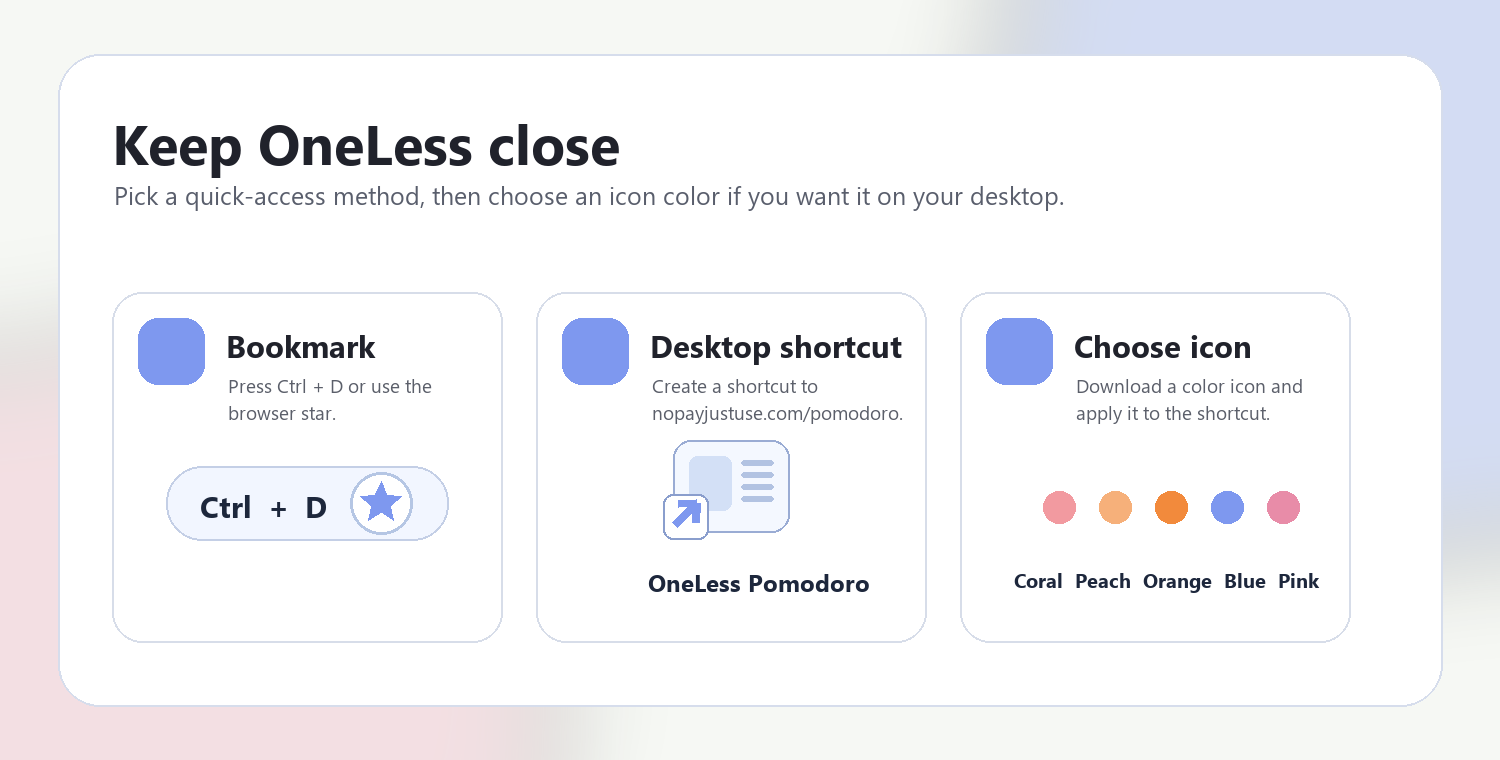
Bookmark this page with Ctrl + D on Windows or Command + D on a Mac. To make a desktop shortcut, use your browser’s shortcut or Add to Home Screen option when available. The shortcut opens the tool page; it does not include your image or settings.

Guide to adding a OneLess browser shortcut

Choose a OneLess shortcut icon

Download a PNG or ICO if your device lets you customize shortcut icons.

QUESTIONS, ANSWERED

Before you save or share.

Is the downloaded picture re-encoded?

No. The decoded bytes are downloaded as they are. Transparency, metadata, compression, and animation are not rewritten.

Which formats work?

JPEG, PNG, and WebP work within the stated limits. SVG, GIF, HEIC, and non-image payloads are rejected in this release.

Can I paste a normal image URL?

No. This tool accepts encoded image bytes, not a web address, and does not fetch remote pictures.

Why does a valid-looking value fail?

The string may be truncated, use the wrong alphabet, contain incorrect padding, declare the wrong MIME type, or decode into an invalid image. Check the complete original value.

Are spaces always removed?

ASCII spaces, tabs, and line breaks in the payload are ignored. Other characters, including quotation marks and markup, are not silently discarded.

Does decoding remove private metadata?

No. The original payload is preserved. Base64 is an encoding, not encryption, and decoding is not a metadata-cleaning operation.

ANOTHER SMALL TASK?

Keep the next step close.

Ready for the image in front of you?

Decode the string. See the image. Keep the original bytes.

Return to Base64 to Image ↑